
MUSIC
It's Wallace Theme Song
It's Wallace theme:
(Download Clip - 2.19MB)
Theme Song
Wallace and Ladmo Show theme:
(Download Clip - 699KB)
Mike Condello
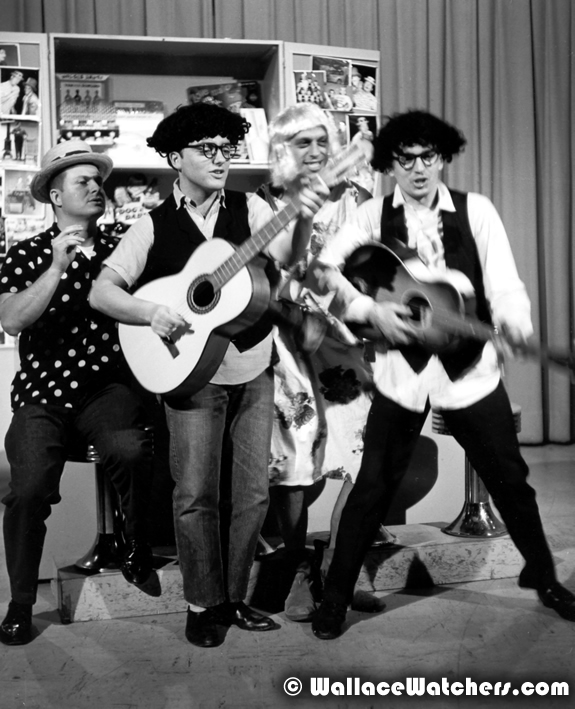 Wallace always felt that music was an
integral part of the show. He promoted local bands through appearances
on the show and at personal appearances. The “music years” were
from 1962–1972. Those were the years that Mike Condello would
lend his considerable talents to not only the TV show, but to hundreds
of personal appearances as well.
Wallace always felt that music was an
integral part of the show. He promoted local bands through appearances
on the show and at personal appearances. The “music years” were
from 1962–1972. Those were the years that Mike Condello would
lend his considerable talents to not only the TV show, but to hundreds
of personal appearances as well.
Ladmo:
“[The music years were] A lot of good times. It brought music to the show with Condello . . . Wallace discovered him at Stage Seven. Jack Curtis on Stage Seven at Seventh Street and Indian School Road . . . it was a teenage dance night every Saturday night and Mike played there. So I think Wallace heard him and went there and saw him and said ‘Hey, would you guys like to be on a show called Teen Beat with Pat McMahon?’ It was played every Monday for, during the summer, for years. [It was] American Bandstand with no dancing, though.”
Mike Condello:
“[Ladmo] was a real musical guy. He got fairly good really quickly at the bass. For a while he was playing bass and was extremely musical with it. Those things we would do, some of the songs we would write, would go so quickly. I mean, you’d have to learn it so quickly and Lad was right there. Boy, he would just learn it. I would sing something one time through and he was ready to do it on the air.”
Read more about Mike Condello on the 1960's page.
Soggy Cereal
Wallace (2007) talking about Mike Condello
Carrie and Mike Story
One particularly pungent night at Legend City I was performing in the Wallace and Ladmo Show. We did them every weekend for a few years. The audience sat on bleachers and in between them and the stage was a kind of a moat which always made me nervous.
This would be 1963. For some reason I was really anxious and feeling insecure that day. I was introduced onto the stage with the Mike Concello Combo backing me up (don't get better than that!). When I opened my mouth to sing, the wrong notes came out. I was singing in a key that was way different from the key the band was playing. I of course, finished my song and ran off the stage to cry out back. We had a sort of dressing room? behind the stage.
When the show was over Mike (who was 15 at the time) found me crying. He put his hand on my shoulder and told me that nobody noticed and it was a great performance. I asked, "really?" He assured me positively, yes. He said "You're always good."
It never happened again.
Pungent, you ask? For some reason unknown to mankind, the wind would shift ten minutes before the show and the stench from the cattle ranch across the street would greet us head on.
Carrie Thompson, Wallace's daughter
LADMO TRIO
One of the early groups formed on the show was the Ladmo Trio, consisting of Ladmo, Mike Condello and Harvey Trundel (as played by then-regular Brian Donohue).
Ladmo Trio: Mike Condello,
Ladmo, and Harvey Trundel
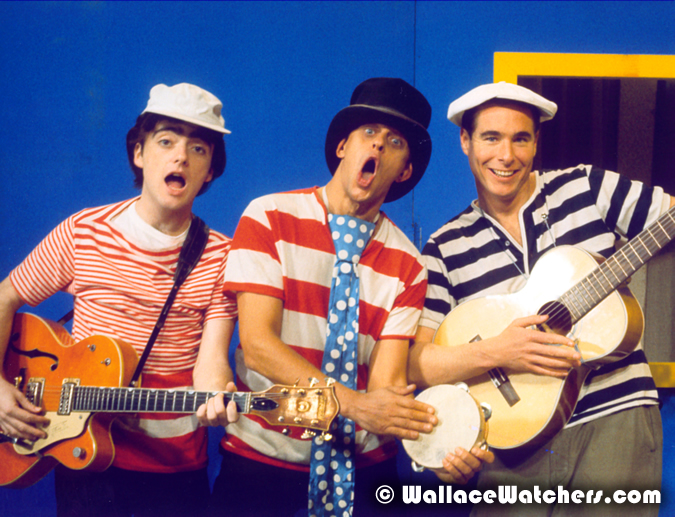
Ladmo:
“I had Mike on my afternoon show. We had a spin-off, Ladmo at lunch, or Ladmo at noon. Mike was my partner. He was my friend on the show. So it was Ladmo and Mike on the afternoon show.”
The musical era of the Wallace & Ladmo show was debuting as the Beatles were taking America by storm. Wallboy responded by having Mike come up with song parodies based on current hit Fab Four tunes.
Mike Condello 45's
Blubber Soul, Mike's Mini Album, and Make A Come Back
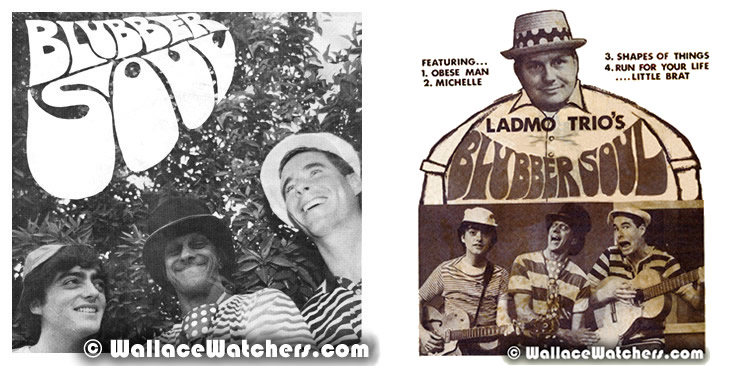
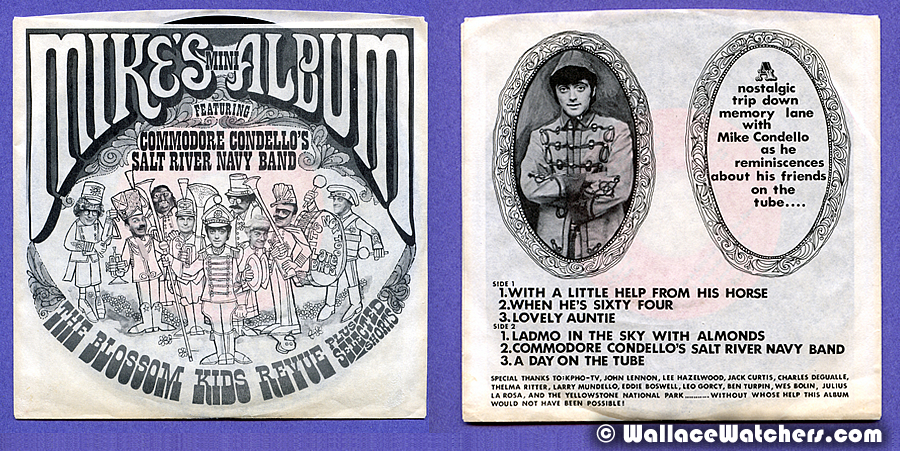
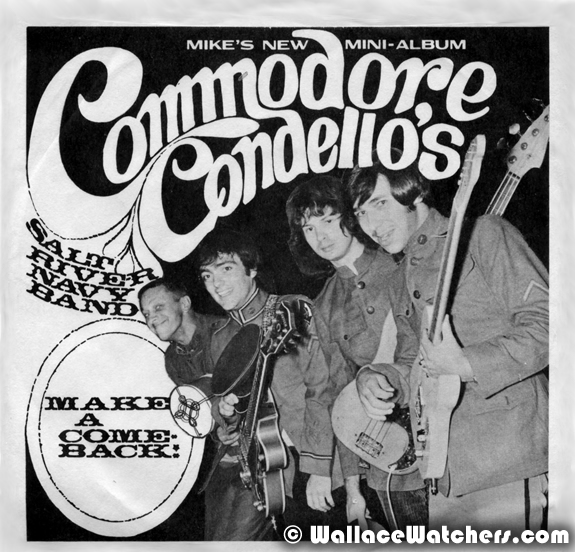
Mike Condello:
“The inspiration for [Commodore Condello’s Salt River Navy Band] was Wallace, basically. He thought, he always enjoyed having music on the show like the parodies I was doing. [He] beat on the door one day and said ‘Gotta do it. Let’s put out a record. Come up with something.’
So the Sgt. Pepper album was popular at the time, so I thought I’d write some parodies of that stuff. So we did it in an afternoon, and basically on that record is about six and one-half to seven hours worth of work. We did things fast in those days. That was done, I believe, it was done mono. One track.”
From the fans:
“I remember the first time I ever saw Mike Condello and noticed what they were doing. I was in kindergarten or the first grade in ’76. I was late for school and as I was running out the door I saw them start singing ‘I heard the news today, Wallboy . . . ‘ and I was mesmerized. It was the coolest song to me and the way the camera moved in and out all ‘psychedelic’ during the song was like WOW! I was hooked and would look out for their parodies songs after that. I was also late for school as were a lot of kids when Wallace and Ladmo had something cool on.”-Shawn B.
“I remember going to one of Ladmo’s drive-thru hot dog eateries – I think around Northern and 12 th Street – and inside they had a small gift shop where you could buy Ladmo’s famous “tie” shirt and other novelties. I bought – or rather my mom did – a 45rpm record of Mike Condello’s spoof of the Beatles’ Sgt. Pepper song. It was pretty cool and I played that thing to death.”
-Paul F.
Read more about Mike Condello on the 1960's page.
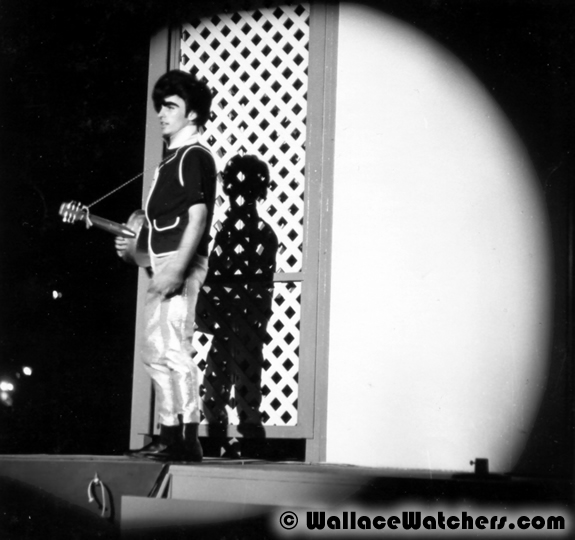
Hub Kapp and the Wheels
Song parodies were not enough for Wallace. He felt that the show needed a true Rock n’ Roll idol.
Wallace takes the story from here:
“[Hub Kapp] was real simple. It was to have a rock star on the show, ‘cause that was the big thing then. Elvis, the Beatles. But then, saying ‘We need a rock star,’ that was my job as a producer. Then you immediately turn it over to Pat to flesh out that guy, sing the songs. Because he could sing and he could write songs. He was perfect at doing a teenage idol. And [Mike] Condello, who wrote the music, was our music director at that time.But Hub Kapp was always good. It was just the whole thing about rock stars and rock and roll started to change in the late 60s and 70s and they got into completely different areas. So it just kind of ran it’s course. I think it got a long play. Four years, or something.”
Hub Kapp and the Wheels
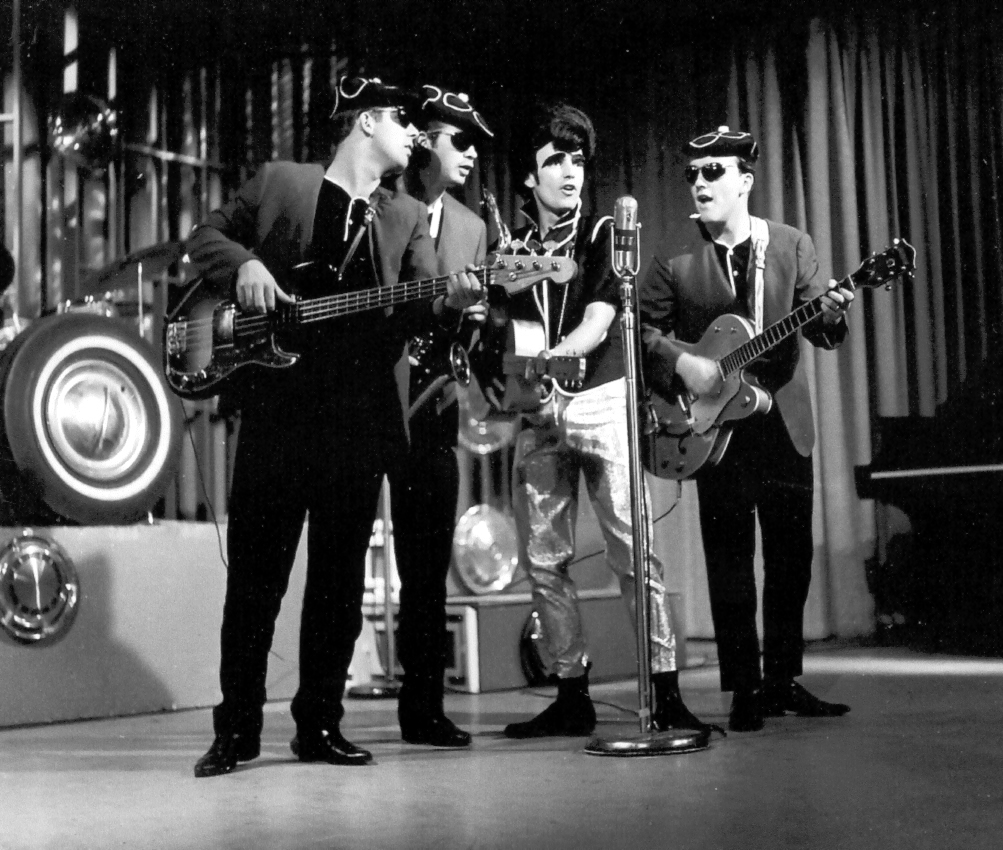
Steve Allen Show, 1964
Pat McMahon, who portrayed Hub Kapp, has this to say:
“Well, we didn’t have anybody [character] who was a musician and everybody was jumping up and down and screaming over Beatles, Rolling Stones and Freddy and the Dreamers, Jerry and the Pacemakers. Everybody in the world who ever had a music group in those days had an audience, so we kind of created our own star. We did it satirically, but in this case the audience one-upped us and they thought it was so much fun, they decided to treat Hub like a star.So we started doing concerts. The records we did get to be number one. We signed with Capitol Records. And they were the worst rock and roll band in the world. I mean, I had a black pompadour wig on. From the scalp up I looked like James Brown. From the scalp down I looked like a cadaver. The amazing thing is with the wig, the eyebrows, false eyelashes, black and white outfit, all of those things . . In those days I was absolutely mondo-bizarro. These days I would look like a neurosurgeon. Nobody would pay any attention to Hub.”
Wallace (2007) talking about Hub Kapp
From the fans:
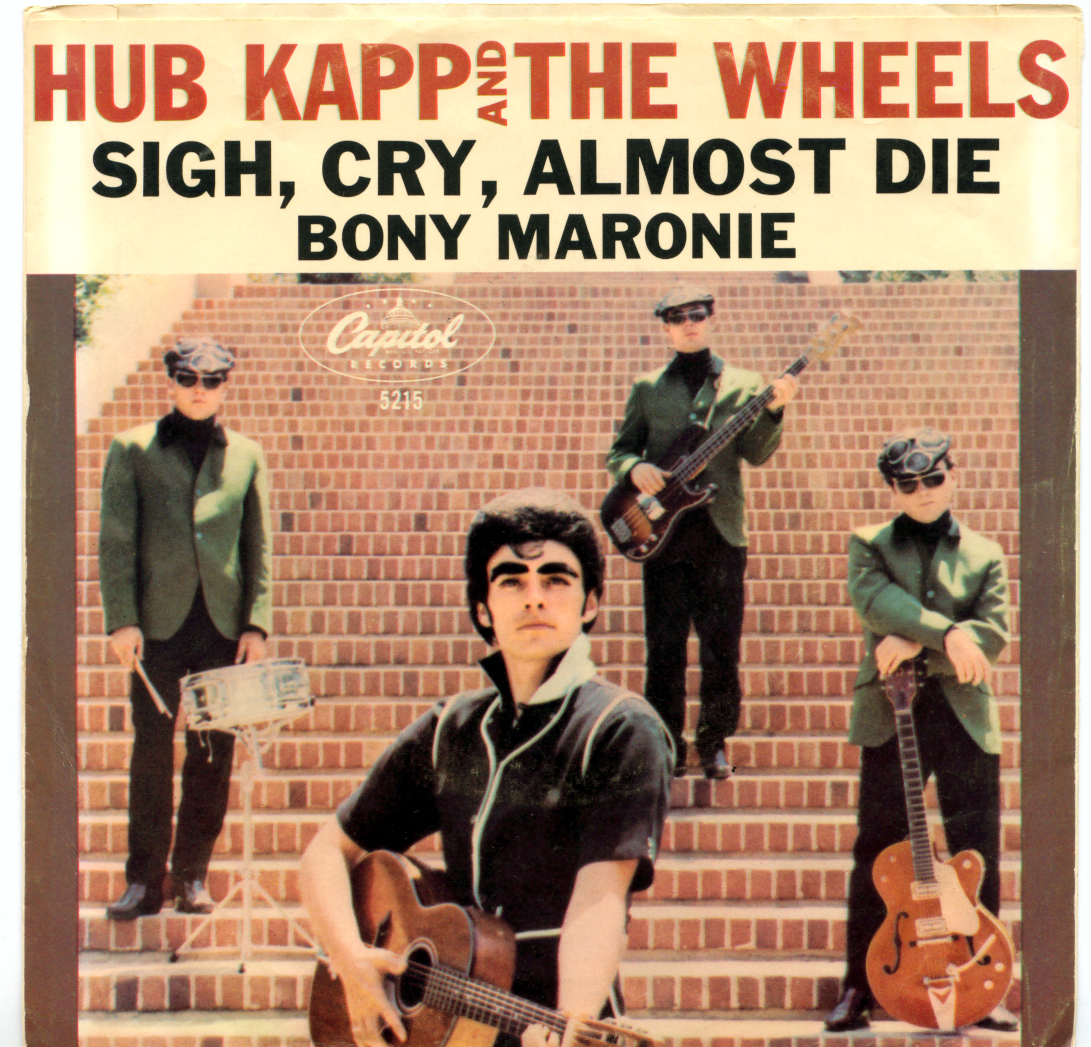
“Some of his [Hub Kapps’] songs were good. My favorite was Sigh, Cry, Almost Die. That was my favorite song, and it was a good one, too. It was kind of done all right for what I thought were amateur musicians. But when they were on the Steve Allen Show, when they were doing the ‘dying cockroach,’ lying on their back and kicking their legs, nobody had really seen that. Rock and roll was pretty straight even though they had their long hair. They didn’t do that, those antics. Hub Kapp with his goofy hairdo. That curl in front of his hair. How could anybody think that that’s anywhere near being real?”-Jerry A.
“One [personal appearance] that stands out in my mind was the opening of one of Ladmo’s hamburger stores. Hub Kapp was to perform. Suffice to say it was a great shock to see some middle-aged man sticking on sideburns and eyebrows and turning into Hub.”
-Cathy I.
Sigh, Cry,
Almost Die Albumn
Hub Kapp and Wheels
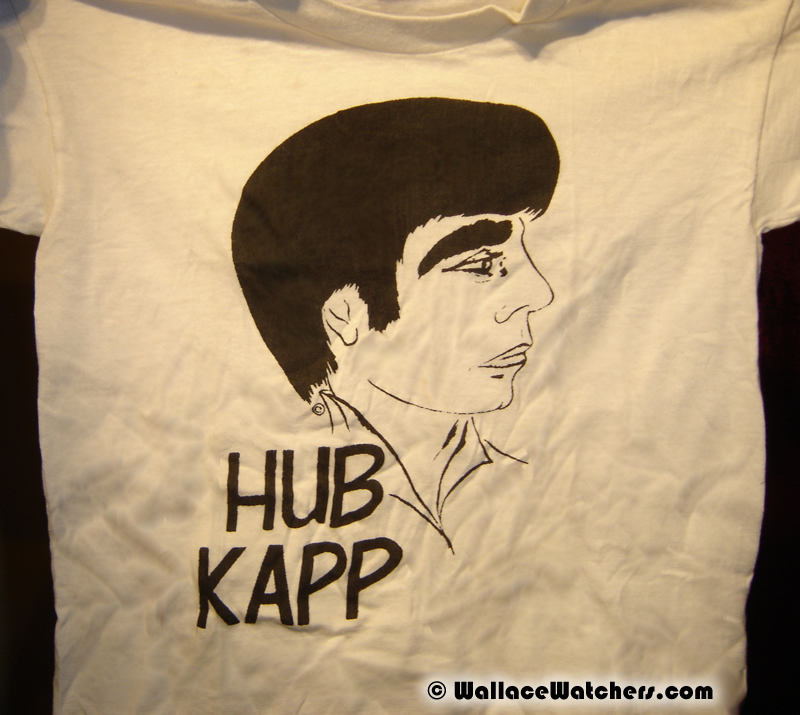
Hub Kapp
Rare Hub Kapp
T-Shirt sold at Drive-In's
The LaChords
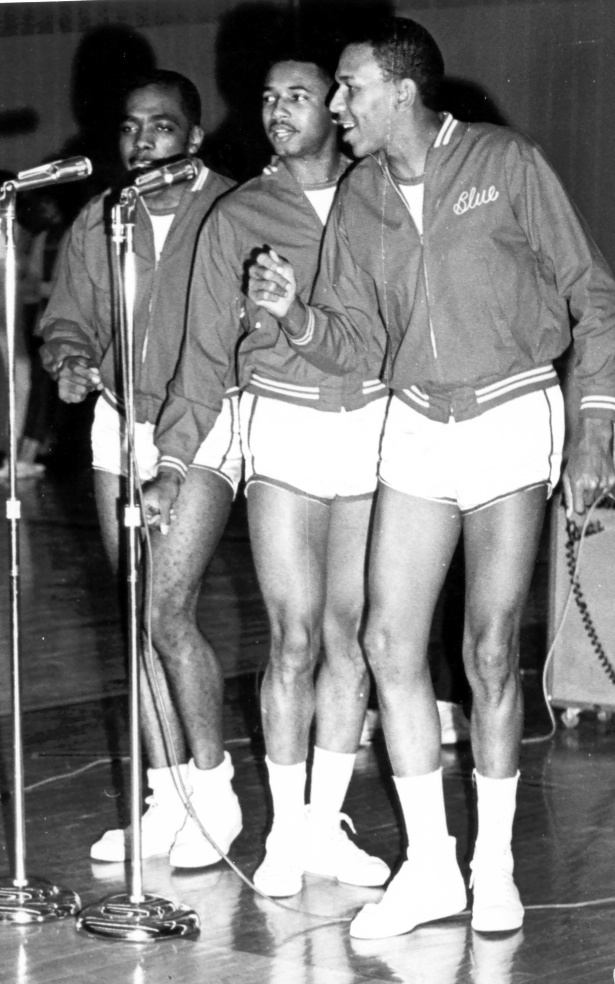
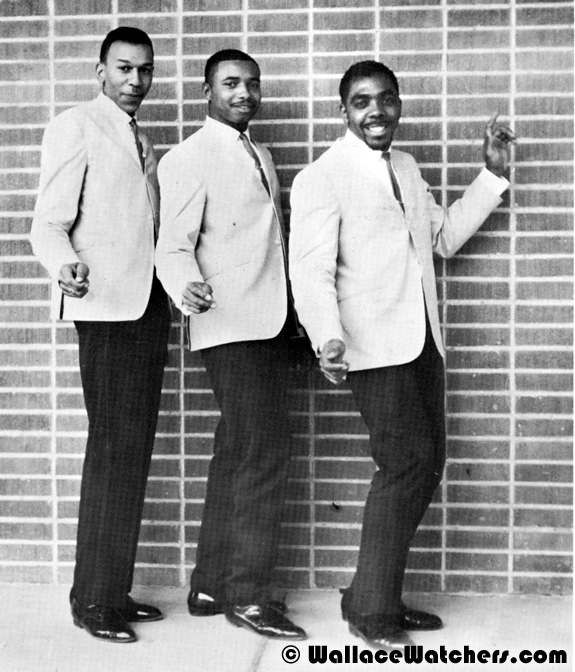
The singing group known as The LaChords originally got together in Germany. US servicemen Dan Moss, Gene Blue, Robert Brown and Ron Post were the original members. At the time, the quartet was known as The Les Chimes. When Ron Post and Robert Brown were shipped back to Arizona, they circulated some of the recordings that they had made overseas. A local school teacher who wanted to get into the record business signed the group to a contract. When the rest of them got back to Arizona, they recorded To Be and Hey Pretty Baby. The record did fine on local stations and the group made many public appearances.
LaChords member Dan Moss continues the story:
“Ron Post decided that he was going to go back to California and get into his father’s business. Robert Brown was still in the military. He was having personal problems, so eventually he was gone. Then we picked up Al Douglas. Al came in and started singing with us. It was interesting because we still had a blend of good-quality harmony.”
LaChords sing before Ladmo Jets Game, 1964
Wallace describes how he discovered the group:
I was in the position of looking for acts for Teen Beat while [Pat] McMahon was in the Air Force. I was putting it together, waiting for him to get back and be the host. I would line up these acts and the very first were the Smith Kids and Sonny Stires and the Sonics. The La Chords were the third act. These were all people that were acts on our stage shows when Ladmo and I went out to shopping centers. They were really early, I mean like 1962. I think they [the La Chords] had just gotten back from Europe and were starting up locally.”
LaChords: Gene Blue, Al Douglas and Dan Moss
Dan Moss of The LaChords:
“We went on The Lew King Show before we did Wallace and Ladmo. Lew King had all his Rangers. They were entertainers. Roosevelt Nettles and these two sisters. I got the feeling it was [performing at] Jack Curtis’ Stage Seven, that’s how we [got to do] Lew King. Because all we did was lip-synch to records, even when we came to [the Wallace and Ladmo] show. That’s all we did. So it wasn’t that difficult. We were looking for a little more exposure. That was the whole idea. I think that’s how we hooked up with [Wallace].”
Joe Bethancourt
Wallace highlighted another talented local musician when Joe Bethancourt began appearing on the show in the 1980's. Joe brought his banjo and other traditional instruments and performed his Southern Appalachian and Ozark Mountains music to the delight of the audience.
Joe Bethancourt
at the Civil War Event
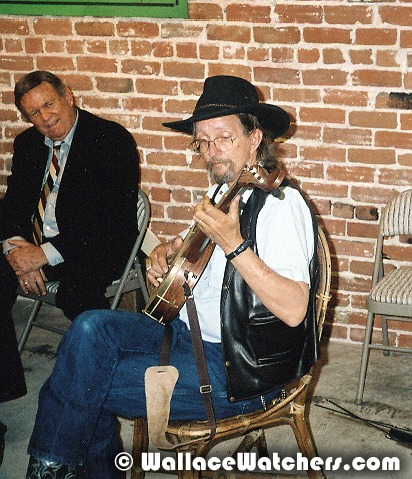
Joe had been performing for years in local establishments like “J.D.’s” and was a staple for 17 years at “Funny Fellows Sandwich Joynt” at 19th Avenue and Bethany Home Road in Phoenix. In addition, Joe also hosted his own radio show on KDKB called “Folk Music Occasional”.